Find a digester near you
Communities and households can locate the nearest community biogas digester accepting organic waste — with directions and contact details.
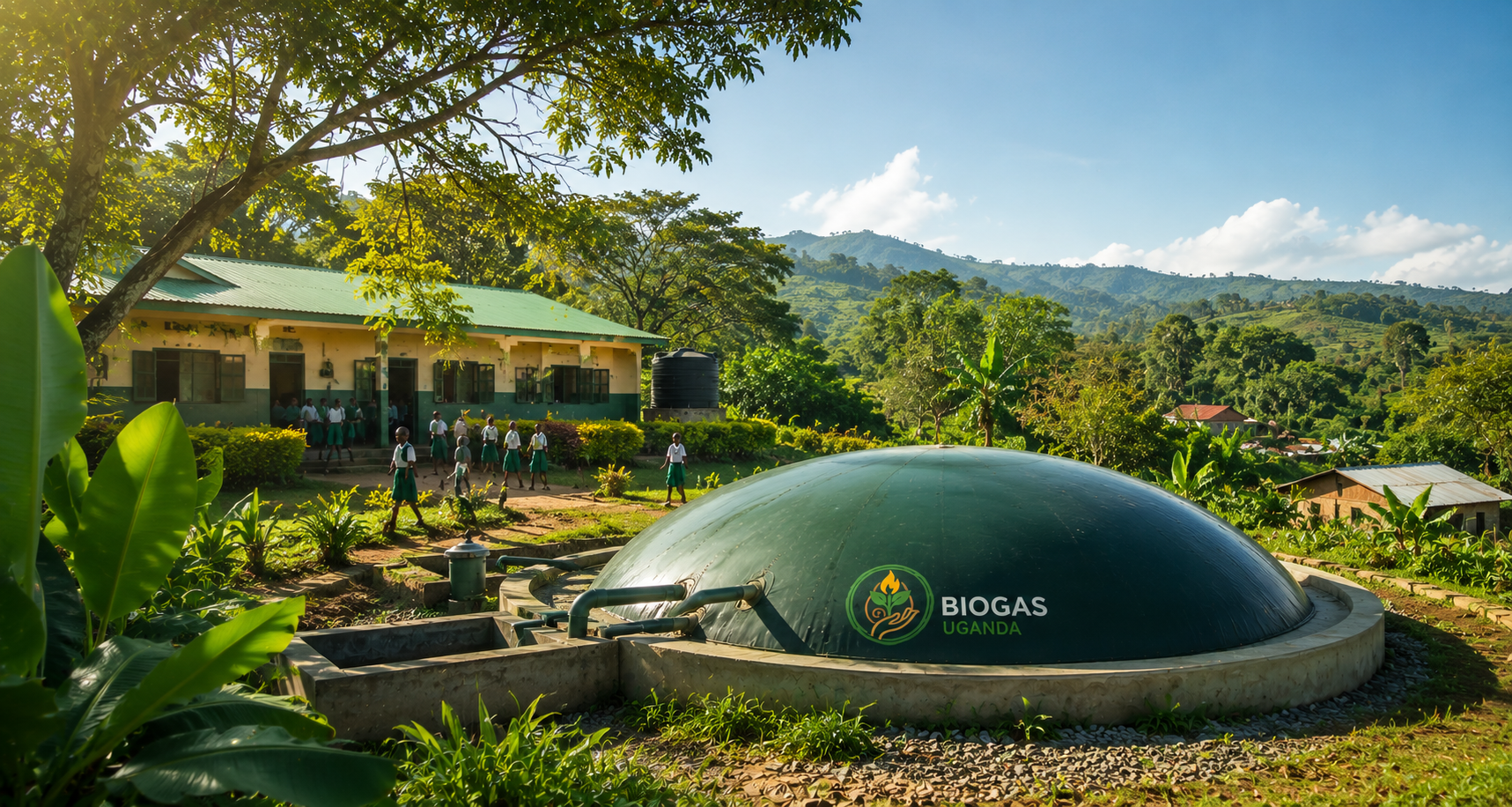
Starting in Mubende District, BioTrack connects rural schools and communities with nearby biogas digesters. Schools cook with gas instead of firewood. Communities turn waste into energy. Forests stay standing.
Every plate of porridge served in a rural school often costs a piece of forest. Meanwhile, the same schools throw away tonnes of organic waste that could fuel a clean stove instead.
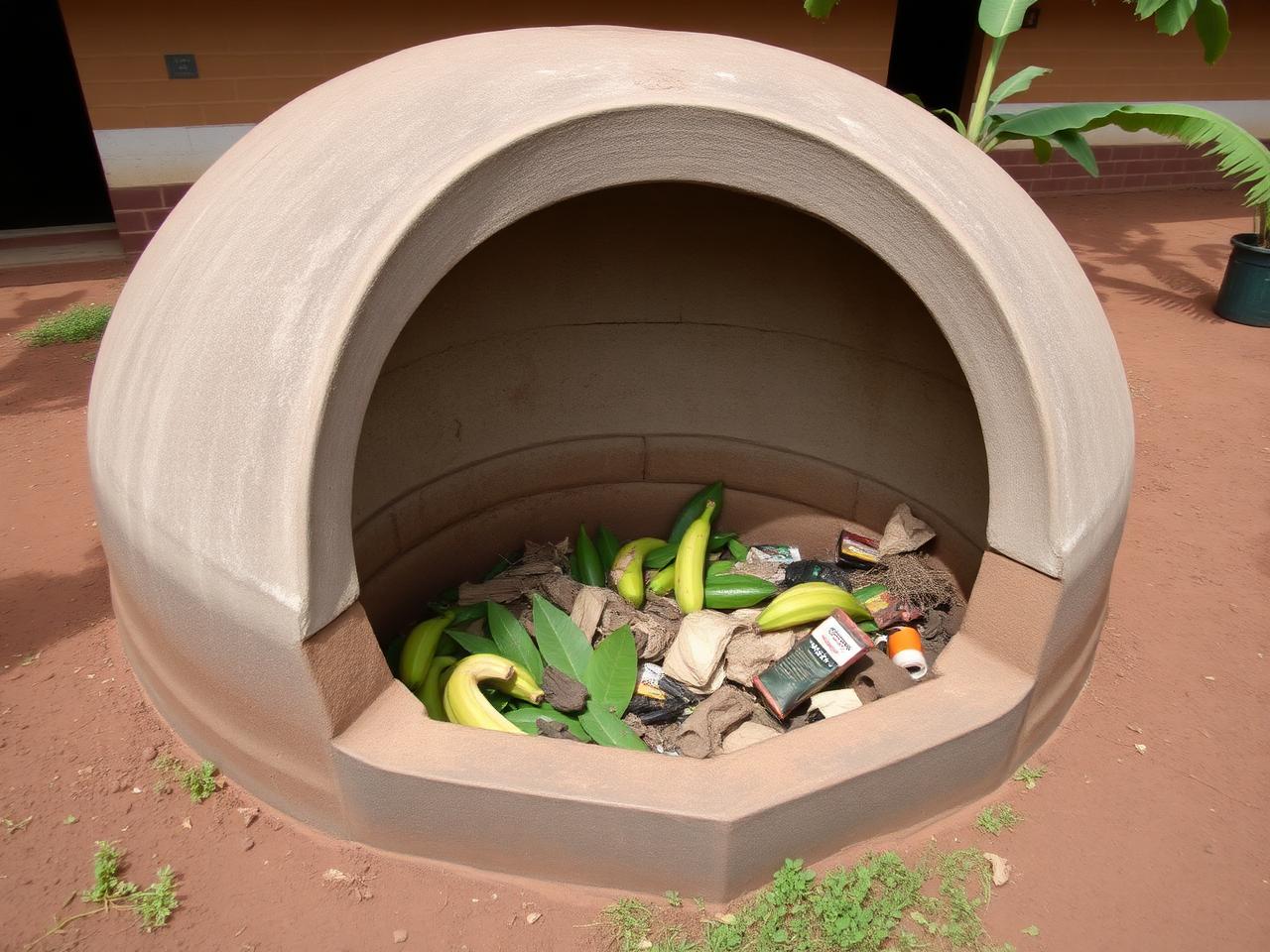
A community biogas digester — fed with food scraps, banana peels and animal waste.
BioTrack closes the loop — school waste becomes school fuel.
No firewood collected. No tree cut. No waste wasted.
BioTrack matches schools that produce organic waste with communities that run biogas digesters — so nothing gets wasted and no tree gets cut.
Communities and households can locate the nearest community biogas digester accepting organic waste — with directions and contact details.
Schools post real-time alerts when they have surplus organic waste to give away — or when they need more feedstock for their digester.
Simple, mobile-first dashboards designed for school cooks, headteachers and community digester operators in low-bandwidth areas.
Every kilogram of waste, every cubic metre of biogas, every tree saved — logged and reported back to schools, donors and IUEA researchers.
A school logs its surplus organic waste — or its need for more — through the BioTrack app.
BioTrack maps the closest community digesters and connects them with the school in real time.
Community operators collect the waste and feed the digester — turning peels and scraps into biogas.
Biogas powers school kitchens. No firewood. No smoke. No tree cut for tomorrow's lunch.
Live numbers from the BioTrack school and digester network, led by the Mubende District pilot.
Tonnes, year to date
Feedstock mix
Estimated trees not cut for firewood thanks to BioTrack-powered school kitchens
BioTrack is proudly funded and supported by IUEA — championing applied research, sustainability, and community-led innovation across East Africa.
BioTrack is built around people. Schools, households and community supporters share waste, share gas, and earn BioTokens for every contribution — redeemable for clean biogas.
Register your school to log organic waste, request more feedstock, or get connected to a nearby biogas digester for clean cooking.
Register your schoolJoin a growing community contributing organic waste to nearby digesters. Earn BioTokens for every contribution — redeemable for clean biogas.
Become a supporterEarn BioTokens. Every kilogram of organic waste you contribute earns tokens that can be converted into biogas for cooking — turning waste into a real, tradable community asset.